Gardening Services in Kings Cross

Gardening Services Kings Cross provides practical help with regular garden care, clearance and outside tidy-ups for homes and small commercial premises in the area. Our work focuses on keeping planted spaces manageable, neater and easier to use, whether that means routine lawn care, cutting back growth, removing unwanted material or improving the overall presentation of a garden. The service is shaped around clear, dependable outdoor maintenance rather than one-off decorative talk, so customers can ask for the specific work they need.
If you need a straightforward way to bring an overgrown plot back under control, or you want ongoing attention to keep beds, borders and access areas in better order, we can help with a sensible scope of work. The right approach depends on what is already in place, how much growth has built up and whether the aim is simple tidying, fuller seasonal maintenance or a wider improvement. Practical gardening support is usually easiest when the work is broken into clear tasks.
For a quotation, begin with the main job you want done and the condition of the space. You can use the service links on this site to explore the most relevant options, and if you already know the task list, make that the starting point for an enquiry. If your garden needs more than one type of attention, it is often best to separate the work into stages so the result is easier to plan.
Routine garden maintenance
Regular garden maintenance is the part of the service that keeps a space from slipping into a state where everything needs doing at once. It can include grass cutting, border tidying, light pruning, bed care and the removal of general debris that collects through the season. The aim is not simply to make a garden look neat for a day, but to keep it in a condition that is easier to manage week after week. This suits front gardens, back gardens and shared outdoor areas that benefit from steady attention.
Maintenance work is also useful when a garden already has structure but needs consistency. A small lawn, a row of shrubs, a few herbaceous beds or a mixed planting area all respond differently, so our approach is shaped by what is present rather than by a fixed routine. Some customers want only the basics, while others need a more involved package that covers several tasks in one visit. Either way, the work is planned to suit the site and the season.
Common maintenance tasks can include:
- cutting and edging lawns
- light pruning and shaping of shrubs
- weeding borders and hard-to-reach edges
- tipping out dead plant material and loose debris
- keeping access routes and visible areas tidy
Lawn mowing and border care

Lawn mowing is often the most regular part of a garden care plan, but it works best when it is joined to sensible border care. A lawn can look uneven if edges are left rough, and the rest of the garden can feel untidy if weeds and overhang are left to spread. We therefore treat mowing as part of a wider finishing process, trimming edges where appropriate and keeping the surrounding planting areas in a neat state. This gives the garden a more complete and orderly appearance.
Border care may involve hand weeding, cutting back soft growth, tidying around shrubs and keeping plants within the space that has been set aside for them. In more established gardens, this can make a noticeable difference to light, access and visual balance without changing the character of the planting. Where there are seasonal changes in growth, the work can be adjusted to avoid over-cutting or disturbing plants that should be left in place. That balance matters in smaller gardens as well as larger ones.
Good lawn and border work depends on timing as much as effort. Wet ground, very long grass, dense weed growth and mixed planting areas may all require different handling, so it is helpful to describe what has built up before the job starts. That makes it easier to judge the likely scope of work and decide whether the first visit should focus on restoration, routine upkeep or a combination of both.
Hedge trimming and boundary shaping
Hedge trimming is useful where boundaries have started to lose their shape or block light, paths or views. A trimmed hedge can restore definition to a front garden, help a rear boundary feel less imposing and stop growth from spilling into neighbouring space. The service can cover formal hedges that need a clean outline, as well as less regular growth that benefits from selective reduction and shaping rather than a harsh cut. The right finish depends on the species, thickness and condition of the hedge.
Boundary work often needs more than a simple top trim. Sides may need reducing evenly, taller sections may need careful lowering and lower growth may need thinning to encourage a healthier shape. In some cases, the practical question is not how neat the hedge looks from one side, but how well it fits its role in the garden overall. Good trimming should leave the plant more manageable and the surrounding space easier to use without making it look stripped back or damaged.
Where access is limited, or where hedges sit close to walls, fences or paving, planning matters. Cutting sequence, waste handling and the final shape all affect the result. If you have several boundary features that need attention, it is usually better to describe them together so the work can be arranged efficiently and the finished outline remains consistent from end to end.
Garden clearance and seasonal tidy-ups

Garden clearance is the service to choose when a space needs more than maintenance and has accumulated loose growth, cuttings, fallen material or general clutter from a period of neglect. It can help reclaim paths, patios, borders and lawn edges that have become difficult to use. Clearances are often about restoring basic order first, then deciding what should be kept, cut back or removed entirely. That makes the garden easier to inspect and gives a more accurate view of what further work is worthwhile.
Seasonal tidy-ups can sit between routine maintenance and a fuller clearance. In spring, that might mean lifting debris, refreshing borders and opening up planting areas. In autumn, it may involve clearing fallen leaves, cutting back tired growth and reducing the build-up that can hide paths or drainage points. The service is practical for customers who want the outside space to feel looked after without turning it into a major redesign. It is equally useful where the aim is simply to make the garden safer and more orderly.
When clearance work is needed, our focus is on separating usable planting from waste, reducing clutter carefully and leaving the area ready for the next stage. That might be a return to regular maintenance, a more focused planting plan or another improvement project. If you want to move from overgrown to usable in a controlled way, this is often the place to start.
Landscape gardening and planting improvements
Landscape gardening covers more than tidying; it involves shaping outdoor areas so they work better as spaces, not just as plant collections. This can include redefining beds, improving the relationship between lawn and planting, adjusting paths or edges and making the most of the ground that is available. The work is often best approached gradually, with decisions based on the size, layout and condition of the existing garden rather than on a fixed formula. That keeps the result practical and coherent.
Planting improvements may be simple or more involved. Some gardens only need refreshed borders and better spacing, while others benefit from the replacement of tired plants, the clearing of unwanted growth or the introduction of stronger structure. We can help shape a more balanced scheme where existing features are kept and weaker areas are improved. Well-judged changes can make a garden easier to maintain as well as more pleasant to use.
If you are considering a broader change, it helps to think in terms of function, not just appearance. A good landscape approach asks where people walk, where water collects, which plants already perform well and what should be preserved. That way, the work supports the garden you have rather than forcing it into something unsuitable. For customers who want a clearer plan, this is the stage at which ideas begin to take practical shape.
About Kings Cross
Kings Cross is an inner London district best known for its transport connections and for the way its streets combine older urban fabric with large-scale redevelopment. The area sits within the London Borough of Camden and has long been associated with rail travel because of King’s Cross railway station and the wider station complex nearby. The name is widely thought to come from a monument to King George IV that once stood in the district, although the area’s modern identity is tied more strongly to transport, industry and later regeneration than to any single historic landmark. The station itself has made the neighbourhood a point of passage for commuters and visitors, while also shaping nearby streets and land use. Around it, former railway and industrial sites have been transformed into new blocks, public squares and routes for pedestrians. One of the most recognised recent developments is the King’s Cross Central project, which changed the scale of the area and brought in a mix of offices, homes, retail and cultural uses. The British Library stands close by at St Pancras, adding a major national institution to the district’s wider cultural setting. Local public space includes Granary Square, with its steps, fountains and waterside setting beside the Regent’s Canal, which is one of the area’s defining features. The canal corridor links Kings Cross to other parts of north and west London and provides a calmer contrast to the rail termini and busy roads. Coal Drops Yard, created from restored historic railway buildings, is another well-known part of the modern streetscape and shows how the area has retained industrial character while taking on new uses. Across the district, there is a strong mix of old and new architecture, from surviving warehouse forms to contemporary office and residential buildings. That combination gives Kings Cross a layered urban character, with transport, commerce, education and public realm all closely interwoven.
Waste handling and greener disposal choices
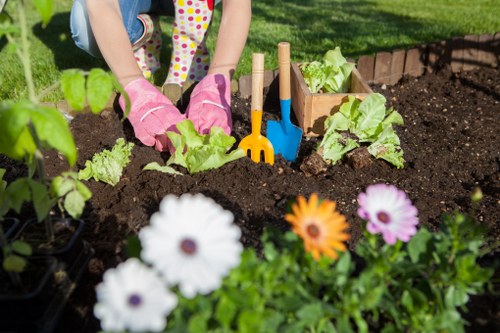
After any substantial garden task, the question of waste handling matters just as much as the cut, trim or clearance itself. Organic material, woody cuttings, soil, dead leaves and mixed green waste need to be gathered and removed in a way that leaves the space tidy and workable. Good handling avoids creating a second job after the gardening is complete and helps the finished area look properly cared for. Where there is a lot to move, the collection plan should match the volume and the type of material involved.
Different jobs produce different waste streams. A hedge trim may produce a large amount of woody cuttings, while a clearance may contain mixed material from several seasons of growth. A mowing task may create a lighter load but still need the edges and fragments dealt with carefully. Responsible handling is therefore about sorting, loading and removing the right material rather than treating every garden job the same. That approach is more efficient and usually leaves a better finish behind.
If you are asking about a larger job, it helps to mention whether the area contains bulky cuttings, long-neglected growth or mixed debris. That allows the work to be planned with the removal stage in mind. A neat result is usually the product of both careful gardening and sensible clearing away afterwards.
Getting ready for a quotation
To request a quotation, start with a clear description of the area and the main tasks you want covered. It is useful to note whether the job is routine maintenance, a one-off clearance, hedge trimming, mowing or a broader improvement project. You do not need to write a long brief, but the more clearly the work is set out, the easier it is to match the right service to the site. If there are access issues, narrow paths or delicate planting to protect, mention those too.
For a useful estimate, it also helps to explain whether the space is straightforward or requires extra attention because of height, density, size or mixed materials. A short list of priorities is often enough. For example, you might want the lawn cut, borders cleared and hedges reduced, or you may only need one area made presentable before a more detailed visit later. Simple, accurate details usually make the quotation process smoother for everyone.
When you are ready, use the appropriate page to send your enquiry and ask for the work to be priced. If you want to keep the project manageable, begin with the most urgent task and build from there. A clear starting point is often the best way to turn a garden plan into a practical job.
Planning access, timing and follow-up work

Some gardening jobs are best completed in one visit, while others work better as a sequence. A long-neglected garden may need an initial clearance before mowing, trimming or planting improvements make sense. Similarly, a tidy frontage might only need regular visits after an initial reset. Thinking in stages helps keep the work realistic and can make it easier to decide what should happen first, what can wait and what needs recurring attention.
Access and timing are also practical considerations. Narrow side passages, gated entries, steep changes in level and shared spaces can all affect how the work is carried out. If several tasks are bundled together, the order matters: waste removal, cutting, edging and finishing each support the next stage. That is why a brief conversation about the space can be more useful than a general request for gardening help. It allows the service to be matched to the actual conditions on site.
For a clear next step, tell us what you want done, what the garden is like now and whether you need one-off or repeat support. Then ask for a quotation and choose the service path that fits best. If you are ready, send the details now and we will take it from there.